✈️ American just ended U.S. international first class — and your 2027 business-class policy is negotiating against a market that no longer exists
American ends Flagship First sales in November. Delta's premium cabin outsold main cabin for the first time last quarter. Corporate premium bookings +9–15% YoY. 8% of managers loosened premium policies — 2× last year, highest since pre-pandemic.
This week
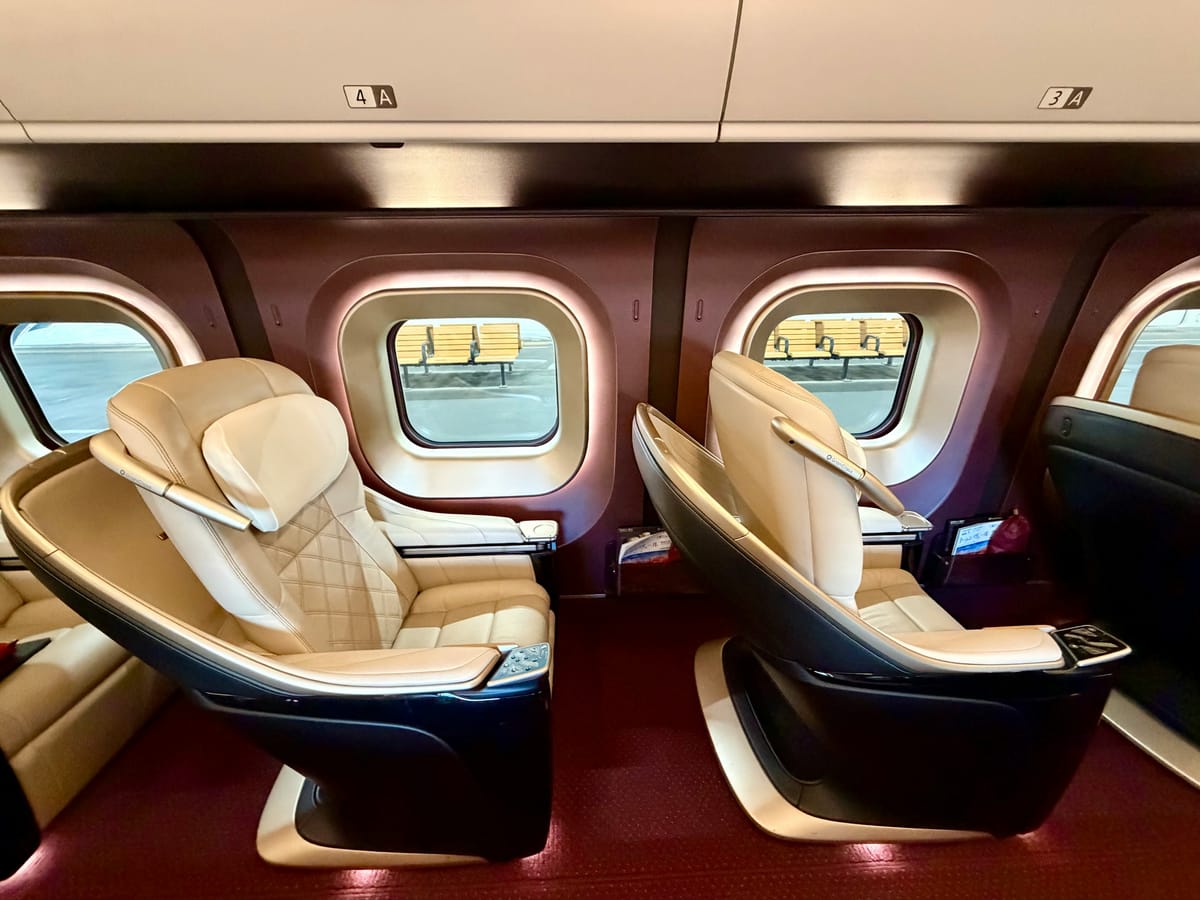
On 5 September, American Airlines set the end date for Flagship First — the last U.S. long-haul international first-class cabin. Sales stop this November for international routes and March 2027 for transcon. The seat is being replaced by a 70-suite Flagship Suite business-class cabin on reconfigured 777-300ERs, with 144 total premium seats per aircraft — a roughly 25% expansion of the premium footprint on those flagships. Announced the same week Morgan Stanley's 2026 corporate travel survey confirmed that 8% of travel managers now report premium-cabin policies becoming more liberal — double last year's figure and the highest share since before the pandemic — and the same quarter Delta's premium cabin outsold main-cabin revenue for the first time in the airline's history ($6.92B vs $6.85B, Q2 2026). The old two-tier mental model — "economy is default, business class is the exception" — is quietly being dismantled on both sides of the transaction. The interesting question for the next four months of 2027 sourcing is whether your cabin policy still assumes the old shape of the market.
Why it matters
1. The supply side has already made the call — premium is where every new seat is going. Delta's 2026 capacity growth is roughly 3% year-over-year, and effectively all of it is landing in premium. American is converting first class into a larger business cabin. New Delta A330-900neos on order for 2029 will carry 56 Delta One suites — nearly double the 29 fitted to the current-generation A330neo, targeted at London and other transatlantic markets. Lufthansa is rolling out Allegris on both the A350 and 787-9 out of Munich and Frankfurt to JFK, EWR and LAX. British Airways' Club Suite now covers every A350-1000, every 787-10 and 787-9, and 41 of 43 retrofitted 777-300ERs. The suite-door business seat is the aircraft's new premium anchor. A 2027 policy that flags "business class" as an exception category is negotiating against a fleet plan that has already priced business as the standard corporate long-haul product.
2. Demand is confirming it, and the corporate segment is leading. Business- and first-class bookings are up roughly 9% year-over-year across the market; premium economy is down about 15%. American reports premium corporate bookings up nearly 15% year-over-year in the twelve months to May 2026. Long-haul premium-cabin demand is running 18–25% above 2019 levels. In the same forecast where GBTA modeled overall 2026 airfare at $756 (+4.7%) and economy at $536 (+8.7%), premium fares are projected at $4,488, up 9.5% — the steepest cabin-class increase in the model. The corporate policy that treats a business-class ticket as the outlier is drafting against a demand curve that already flipped.
3. The hotel side is echoing the same skew, and CSRD is watching from the sidelines. CBRE upgraded its 2026 U.S. hotel RevPAR forecast to 2.5% — more than double its January forecast of 1.2% — citing a "meaningful recovery" in business transient and group travel. The lift is concentrated in the top: luxury hotels are forecast at +5.2% RevPAR, midscale +0.7%, and economy actually declining -0.6%. That is the same premium-first shape playing out in air, and every basis point of that mix lands on your Scope 3 disclosure with a bigger emission factor and a bigger euro figure. The 2027 policy that still assumes a "one class for everyone" hotel and cabin rule cannot explain the assurance file it will produce.
What this means for your program
- Rewrite the cabin threshold before the RFP, not after. The "business class allowed on flights over X hours" line is the load-bearing sentence in most policies. If X was set in 2022, look at what your travellers are actually booking now, on which routes, at what fare bands — and re-set the threshold at the number the data supports, not the number the CFO conversation ended at three years ago. Policies that lose credibility on the threshold get worked around; a defensible number that reflects the current fleet earns compliance.
- Move the approval decision from "cabin class" to "trip envelope." Airlines are collapsing the class ladder from 4 tiers into 2 — premium and main. Your policy engine should do the same: instead of an approval per-cabin, approve against a full trip envelope (route + duration + fare band + advance-purchase window). A €4,200 transatlantic business seat booked 21 days out on a red-eye may be inside envelope; a €3,000 short-haul business seat 24 hours before departure is not. The old cabin-based rule cannot see the difference.
- Use the CBRE hotel skew as a sourcing signal, not just a rate line. If luxury RevPAR is +5.2% while midscale is +0.7%, the rate lift in your program is coming disproportionately from the top-tier properties your travellers keep booking. Q4 RFP should re-bid the luxury cluster with volume-tier commitments where you actually have leverage — not spread negotiation effort evenly across the tree.
- Capture the cabin-class delta at booking time, per line, into the CSRD file. Business is roughly 3× the emission factor of economy on the same segment under most standardised methodologies. If your reporting only tracks total flights, the assurance file will reproduce a number the auditor cannot reconstruct from booking records. Stamp the cabin-class emission delta on each booking as it happens — that is the artifact that reconciles.
The numbers
- American Airlines set the Flagship First end date on 5 September 2026: international ticket sales stop in November 2026, transcon in March 2027, replaced by 70 Flagship Suite business seats and 144 total premium seats per reconfigured 777-300ER — a ~25% premium-footprint expansion on those aircraft. (AFAR, Airline Geeks, The Points Guy)
- Delta Q2 2026: premium cabin revenue overtook main cabin for the first time — $6.92B vs $6.85B, a $517M swing in a single quarter. Roughly 3% of Delta's 2026 capacity growth is concentrated in the premium cabin, with future A330-900neos configured with 56 Delta One suites (vs 29 today), targeted at transatlantic hubs including London. (CNBC, Delta IR — June Quarter 2026 Results, Simple Flying — A330-900neo 56 suites)
- GBTA 2026 forecast: premium fares projected at $4,488, up 9.5% — the steepest cabin-class rise in the model. Overall global airfare is forecast at $756 (+4.7%); economy at $536 (+8.7%). Long-haul premium-cabin demand is running 18–25% above 2019 levels. (GBTA, Travel Daily News — GBTA 2026 forecast)
- Corporate demand confirms the shift. Business- and first-class bookings are up ~9% year-over-year; premium economy is down ~15%. American reports premium corporate bookings up nearly 15% year-over-year in the twelve months to May 2026. Morgan Stanley's 2026 corporate travel survey found 8% of travel managers now report premium-cabin policies becoming more liberal — double last year's figure and the highest since before the pandemic. (Hickory Global Partners — Premium Travel Is Growing)
- CBRE upgraded its 2026 U.S. hotel RevPAR forecast to 2.5% (from 1.2%) on "meaningful recovery" in business transient and group. Luxury properties forecast at +5.2% RevPAR, midscale +0.7%, economy -0.6%. (Business Travel News — CBRE upgrades 2026 outlook, Business Travel Executive — CBRE upgrades projections)
Two tools built exactly for this moment
Premium creep does not stay inside the TMC channel. When a traveller wants the suite door on the transatlantic, they will find their way to airline.com or a direct-connect NDC storefront the moment your search results feel narrower than what the airline is actually selling. Which means the corporate visibility you need — cabin class, fare basis, spend per traveller per quarter — has to come from the card feed and the expense record, not just the booking file.
- Travel Code Expense Management → — receipts, approvals, in-policy vs out-of-policy tagging against your own rules, Excel export, and every card transaction unified into a single view. When a traveller books a business seat directly with the airline because your TMC did not surface it, the ticket still lands in the same expense record — with the cabin-class tag your Scope 3 file needs.
- Travel Code Net-60 Card → — real-time card feed with per-swipe visibility, budget rules with auto-freeze at 80%, 60-day settlement at 0% interest. Premium-cabin buys post the moment they happen instead of arriving on a monthly TMC invoice three weeks later — the same per-line evidence your assurance file needs, on the euro side.
The bottom line
The premium cabin is no longer the reward at the top of the aircraft; it is the aircraft. American just made it official on the U.S. side, Delta made it official in the P&L last quarter, Lufthansa and British Airways made it official in their fleet plans two years ago. The 2027 corporate policy that still treats business class as an exception is negotiating against a supply reality where the airlines have already made the choice — and against a demand reality where your own travellers are booking premium at 9–15% above last year. Re-set the threshold, move approval from cabin class to trip envelope, and get the cabin-class delta into the booking record the moment it happens. That is the policy that stays defensible in a market that keeps moving upmarket.
What's new at Travel Code
External bookings, now first-class citizens of My Trips. When a traveller books outside the platform — say, directly with the airline because the suite they wanted was only on airline.com — the new External bookings tab in My Trips gives that trip its own home, with an out-of-policy label attached automatically and confirmation details recognised from an uploaded PDF. The point is not to discourage the off-channel buy: sometimes the airline is genuinely the only place the seat lives. The point is that the trip does not disappear from the audit file just because it did not come through the TMC. When the CSRD assurance conversation arrives, the ticket is on the record with the cabin class attached.
Sources
- AFAR — American Airlines unveils new Flagship business suites
- Airline Geeks — American sets end dates for Flagship First
- The Points Guy — American's first revamped Boeing 777 with suites
- CNBC — Delta Air Lines Q2 2026 earnings
- Delta IR — June Quarter 2026 Financial Results
- Simple Flying — Delta A330-900neo with 56 Delta One suites
- Hickory Global Partners — Premium travel is growing, the smarter question is where it pays off
- GBTA — 2026 Business Travel Forecast
- Travel Daily News — GBTA forecasts elevated business travel prices through 2026
- Business Travel News — CBRE upgrades 2026 U.S. hotel outlook
- Business Travel Executive — CBRE Hotels Research upgrades U.S. hotel projections
Travel Code helps corporate travel and finance teams see, control, and reconcile every dollar of trip spend — in one platform. travel-code.com · Expense Management · Net-60 Card