⏱️ EES doubled Frankfurt's passport queue to 120 minutes — and ETIAS was just pushed to 2027.
Wait times at Germany's biggest hubs are 2× what they were last July, per airport data reported by the Financial Times. Amsterdam and Munich are already at the same point. The pre-travel authorization that was supposed to layer on top of this just slipped — meaning EES is the border reality your pr
This week
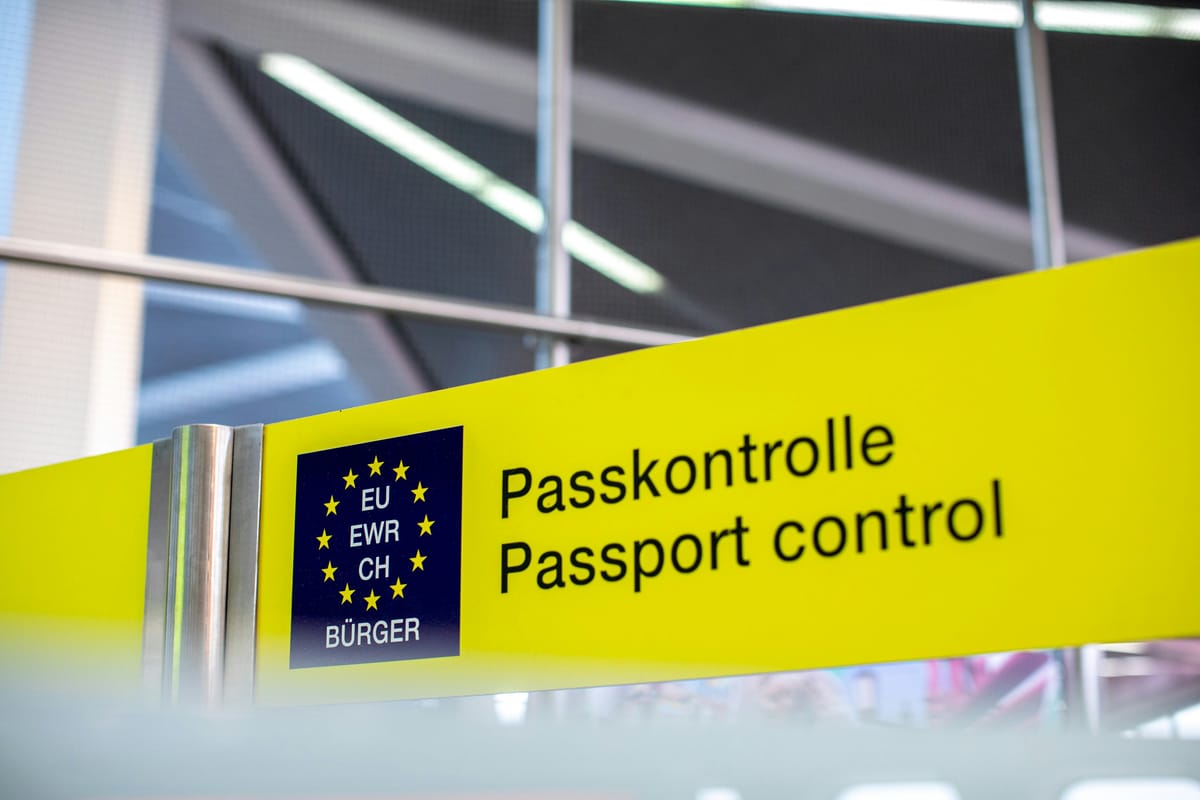
Fresh airport data reported by the Financial Times and picked up across European press this week put a number on what your travellers have been feeling since spring: average wait times at Frankfurt hit 120 minutes in July, double the 60 minutes recorded the same month a year earlier. Munich went from 31 minutes to 60. Amsterdam's maximum queue climbed from 80 to 120. A Frankfurt airport spokesperson told the FT that the EU's Entry/Exit System had "contributed to departure delays and further operational disruptions." Then, two weeks later, eu-LISA acknowledged that ETIAS — the pre-travel authorization that was going to sit on top of EES — won't launch in 2026 after all. That leaves EES, in its current queue-doubling state, as the border reality your travelers face for at least the whole next planning cycle.
Why it matters
1. EES delay is structural, not startup pain. The European Commission's own data pins the average EES registration at ~70 seconds — the technology is not the constraint. The volume of first-time non-EU travellers arriving at Frankfurt, Amsterdam, Munich, and every other major Schengen entry point at peak hours is the constraint. Kiosk capacity, staffing, and physical hall geometry aren't going to double at Europe's largest airports over the winter. Frankfurt, Paris, Amsterdam, Brussels, and Milan have already been granted a temporary derogation allowing airports to switch off biometric collection for up to six hours at a time when queues become critical — that's the emergency valve, not the plan.
2. ETIAS was supposed to smooth arrivals — it just slipped. ETIAS pre-authorization would have front-loaded some of the checks EES now does at the border. That launch, previously targeted for late 2026, has now been dropped from the 2026 window entirely; eu-LISA has publicly said 2026 is no longer feasible, and the industry read is a 2027 debut at earliest. Any program plan that assumed "EES teething will ease when ETIAS lands" needs to be replanned. For the entire 2027 travel-planning cycle, EES-only is your operating assumption.
3. A missed connection at a European hub is a full-day meeting loss. Business travelers landing in Frankfurt or Amsterdam for a same-day onward flight or a same-day client meeting used to plan for a comfortable margin. That margin was built on 30–60 minute passport control. At 120 minutes — with variance up to three hours during peaks — the connection buffers written into your policy are now under-priced. When your traveller misses the connecting flight, EU261 covers rerouting and reasonable expenses; it does not cover the meeting that didn't happen or the client contract that shifted.
What this means for your program
- Extend European hub minimum connect times in policy — now, not at Q4 planning. For any itinerary transiting FRA, MUC, AMS (and increasingly CDG, FCO, BRU) with a non-EU passenger at first Schengen entry, the working buffer for onward same-ticket connections should sit at 3 hours minimum, not the 90 minutes many programs default to. Your TMC's MCT is a supplier rule; your policy MCT is a corporate rule. They should not be the same right now.
- Reroute the first Schengen entry where the itinerary allows. Not every trip needs to enter through Frankfurt. Second-tier hubs — Vienna, Copenhagen, Helsinki, Warsaw — process a fraction of the non-EU volume at their border and have posted materially shorter EES queues. Where a fare of similar class is available with a smaller-hub first entry, the swap costs your program little and saves your traveler an hour they can spend at the meeting.
- Rebalance European short-haul air toward rail where the origin/destination pair supports it. Amsterdam–Brussels, Paris–London (post-EES, this includes Eurostar with its dedicated EES kiosks), Frankfurt–Basel, Milan–Zurich — high-speed rail avoids the airport-border chokepoint entirely for intra-Schengen and eurozone segments. Amadeus Cars and ground-mode integration in your booking flow is what makes the swap frictionless instead of a policy exception.
- Brief every traveller with a Schengen entry this quarter. If they haven't been to Europe since April 10 — the day EES became fully operational — the border they remember doesn't exist anymore. Fingerprints, facial scan, and a 70-second personal registration on first entry within any three-year window. That's a real time-cost the first trip, and it changes the shape of every same-day agenda they've built before.
The numbers
- Frankfurt: 120 min average wait in July 2026, up from 60 min in July 2025. Amsterdam max: 80 → 120 min. Munich: 31 → 60 min. Airport data via the Financial Times, corroborated by Euronews. (Euronews)
- 70 seconds — European Commission's stated average per-traveller EES registration time. The delay is volume + kiosks, not the check itself. (Wego / EU data)
- Full operational date: 10 April 2026 — the point at which every non-EU short-stay traveller must complete a biometric EES registration on first Schengen entry within a three-year cycle. (Munich Airport)
- ETIAS delay: no 2026 launch. eu-LISA has publicly stated the late-2026 date is no longer feasible; the debut has now been reported as 2027 at earliest. That removes the assumed "EES + ETIAS will smooth arrivals" plan from the 2027 planning cycle. (AFAR · Business Travel Magazine)
- Context for the pressure on European corporate travel: global business travel spend forecast at $1.71T in 2026, up 7.2%, across 1.84B trips (GBTA BTI, 3 Aug 2026). Spend is rising faster than trip volume — every one of those trips is more expensive, and every hour lost at a Schengen border is worth more per traveller than it was in 2019. (GBTA)
Two tools built exactly for this moment
Full disclosure — we build these:
- Travel Code Expense Management → — when a traveller misses their onward connection at FRA, the trip generates an unplanned overnight, a re-book fee, a taxi, and a meal, all under different VAT codes. Expense Management unifies card transactions, structured receipts, and in-policy tagging so the finance team sees the entire disruption cost against the trip, not a scatter of orphan line items.
- Travel Code Net-60 Card → — a re-booked business-class transatlantic ticket at the airport counter is a five-figure cash-flow event. On the Net-60 Card that cost sits inside the 60-day settlement window, meaning your traveller gets home before your working capital moves — and your finance team gets the parsed receipt in the same feed.
What's new at Travel Code
Cars from Amadeus, live company-wide. Corporate and standard rates are now merged into a single search inside Travel Code. DiscoverCars retired. When Frankfurt is a 3-hour bet and the traveller needs to just drive Frankfurt → Basel or Amsterdam → Cologne, the ground option is no longer a separate booking journey — it sits next to the flight, under the same policy and the same card feed.
The bottom line
EES isn't a story about a border technology — it's a story about your program's connection buffers, hub choices, and the buffer you build into every European same-day agenda. The Financial Times numbers this week confirmed what your travellers have been telling you since spring. The ETIAS slip removed the one plan that was supposed to make it better next year. The response is not to complain about the airport — it's to rewrite the pieces of your program that assumed 2019-era passport control. Do that in the next four weeks, before Q4 volume hits, and your travellers will notice.
Sources
- Euronews — Europe's new border system is causing huge airport queues as EES wait times double (12 Aug 2026)
- The Local — EES delays cause wait times to double at major German airports (13 Aug 2026)
- Wego Travel Blog — EES Airport Queues in August 2026
- Munich Airport — EES: The new Entry/Exit System
- AFAR — Europe Delays ETIAS Travel Authorization Until 2027
- The Business Travel Magazine — Business travel sector responds to reports of ETIAS delay
- ATPI — EES and Business Travel: What Travellers Need to Know
- GBTA — Global Business Travel Spending to Hit Record $1.71 Trillion in 2026
Travel Code Insider is a weekly briefing for corporate travel leaders. Reply with what's working — or what isn't. travel-code.com · Expense Management · Net-60 Card