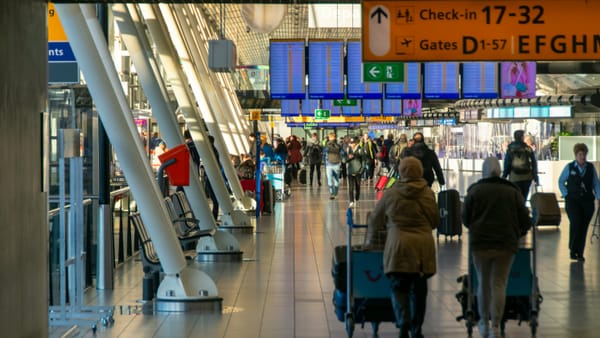
🛂 43,728 turned away at Europe's new border. Could your traveller explain their trip?
The EU's Entry/Exit System just turned one. More than 1 in 3 refusals were people who couldn't justify why they came, and 1 in 5 would have overstayed. What to give your non-EU travellers before their next Europe trip.
This week
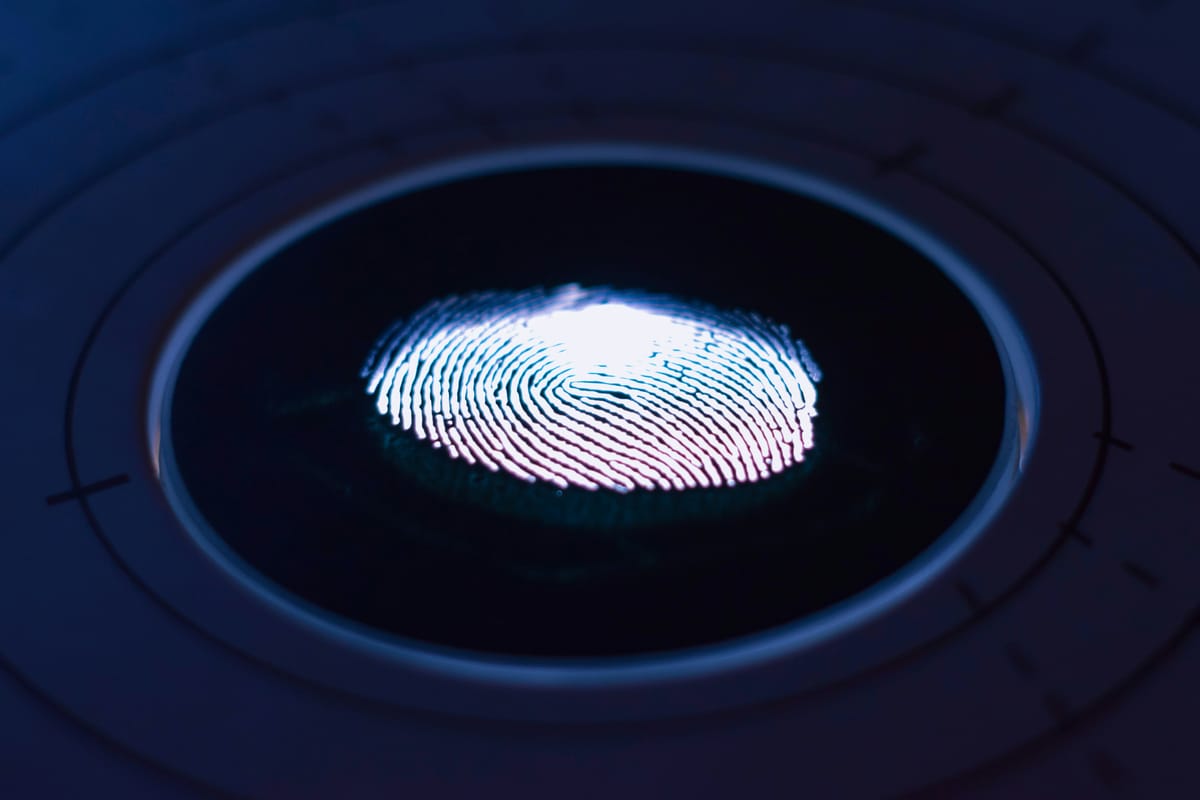
The EU's Entry/Exit System turned one on 12 October. Passport stamps at Schengen borders have been replaced by a database that scans the fingerprints and face of every non-EU visitor and records each entry and exit. By July it had logged 145 million crossings and refused entry to 43,728 people. The biggest reason was not fraud or security. In 16,383 cases, the traveller could not show the border officer why they were coming. Another 8,739 would have stayed longer than the 90 days the rules allow in any 180. The figures don't say how many of them were business travellers. But the rules a border officer applies to a tourist also apply to your consultant on their fourth trip to Frankfurt this quarter, and the machine now counts their days. So if a border officer asks your traveller "what is the purpose of your visit?", could they show the answer on paper?
Why it matters
1. The 90-in-180 rule is now counted by a computer, not by a guard flipping through stamps. Every entry and exit is recorded. A project manager who spends three weeks a month in the Schengen area can hit 90 days without anyone noticing, until a border officer does. Exceeding it is now a recorded overstay, not a smudged stamp.
2. "Purpose of stay" is the number one reason for refusal. EU border rules already list what counts as evidence for a business trip: an invitation from a company or authority to meetings, conferences or events, other documents showing a working relationship, or tickets to a trade fair or congress. Few travel programmes make sure their travellers carry any of it.
3. The system is still unstable, and the rules around it are unclear. In June a Frontex deputy director said the system could take one to two years to stabilise, because first-time fingerprint enrolment is the hardest part. The legal power to ease checks during queues expired on 6 September, yet nine countries, including France, Germany and Italy, have reportedly been allowed to keep easing them, with no new deadline. And ETIAS, the €20 travel authorisation meant to follow, is on hold with no launch date.
What this means for your program
- List who travels to Europe on a non-EU passport, including UK, US and other visa-exempt staff, not just those who need a visa. Count each person's Schengen days over the last 180 using the European Commission's free short-stay calculator.
- Give every Europe trip a written purpose. A one-page invitation letter from the host company or a conference registration, plus the return booking and hotel confirmation, on the traveller's phone. It takes five minutes before the trip and saves an argument at the border.
- Add time on long-haul arrivals. First-time enrolment is where the queues are. Don't book tight onward connections or same-morning meetings for a traveller's first entry since the system started.
- Warn travellers about ETIAS websites. Applications are not open yet, and more than 150 websites are illegally offering them. Anyone who "paid for ETIAS" this year paid a fake site, so an ETIAS fee on an expense claim right now means someone needs to check their card.
The numbers
- 12 October 2025 to 10 April 2026: EES was phased in over six months and has been fully operational at every external Schengen border crossing since 10 April. It records travel document data, fingerprints, a facial image, and each entry and exit. (European Commission, 10 Apr 2026)
- More than 145 million entries and exits were registered by late July 2026. (European Commission, 27 Jul 2026)
- 43,728 refused entry, out of around 110 million crossings: 16,383 for not sufficiently justifying their trip, and 8,739 who would have overstayed. (The Connexion, citing European Commission data, 6 Jul 2026)
- 9 countries reportedly still easing biometric checks after the legal power to do so expired on 6 September: France, Germany, Italy, Belgium, the Netherlands, Greece, Malta, Portugal and Switzerland. The Commission declined to comment. (Biometric Update, 14 Sep 2026)
- €20, no launch date, 150+ fake sites: ETIAS will cost €20 (free under 18 and over 70) and last three years, but ABTA says it is "back on hold". More than 150 websites are illegally offering applications. (Euro Weekly News, 14 Oct 2026)
Two tools built exactly for this moment
A border delay leaves costs behind: a missed connection, a rebooked flight, an extra hotel night, a taxi to the meeting you were late for. You want each one recorded against the right trip, so nothing gets paid twice or lost.
- Travel Code Expense Management →: receipt capture, automatic checks against your policy, and approval routing, with bookings and card transactions reconciled in one ledger. Disruption costs sit next to the original trip, so you can see what border delays cost you. Everything exports to Excel.
- Travel Code Net-60 Card →: 60-day settlement at 0% interest, per-transaction visibility, and budget rules that auto-freeze at 80%. Last-minute rebookings go on a card you control, and you can see them line by line the same day.
The bottom line
Europe's border no longer forgets. Every entry and exit is stored, every day in the Schengen area is counted, and "I'm here for a meeting" has to be backed up. None of this is new law; the 90-day limit and the duty to prove the purpose of a trip were already in the rules. What changed is that they are now enforced by a machine. The fix is cheap: know who travels on a non-EU passport, count their days, and send them with a letter that explains the trip. Do it before the next long-haul arrival, not after the first refusal.
What's new at Travel Code
Did you know every trip request in Travel Code now has its own discussion thread? The employee and the approver can talk inside the request itself, before or after the decision. The employee's reason for the trip and the approver's comments stay with the trip, instead of getting lost in an email chain. (Changelog →)
Sources
- European Commission — Entry/Exit System (EES) is fully operational (10 Apr 2026)
- European Commission — The Entry Exit System is fully operational since 10 April 2026. Who is exempt? (27 Jul 2026)
- The Connexion — EES border system has refused entry to 44,000 people since launch, says EU (6 Jul 2026)
- Biometric Update — EU lets 9 Schengen countries delay full EES biometric checks (14 Sep 2026)
- Euronews — Europe's chaotic Entry/Exit System could take up to two years to stabilise, EU official warns (10 Jun 2026)
- Euro Weekly News — Brits heading to Spain warned over fake travel permits as ETIAS applications remain closed (14 Oct 2026)
- Regulation (EU) 2016/399, Schengen Borders Code — Annex I, supporting documents to verify entry conditions
- European Commission — Short-stay calculator
Travel Code helps corporate travel and finance teams see, control, and reconcile every dollar of trip spend in one platform. travel-code.com · Expense Management · Net-60 Card