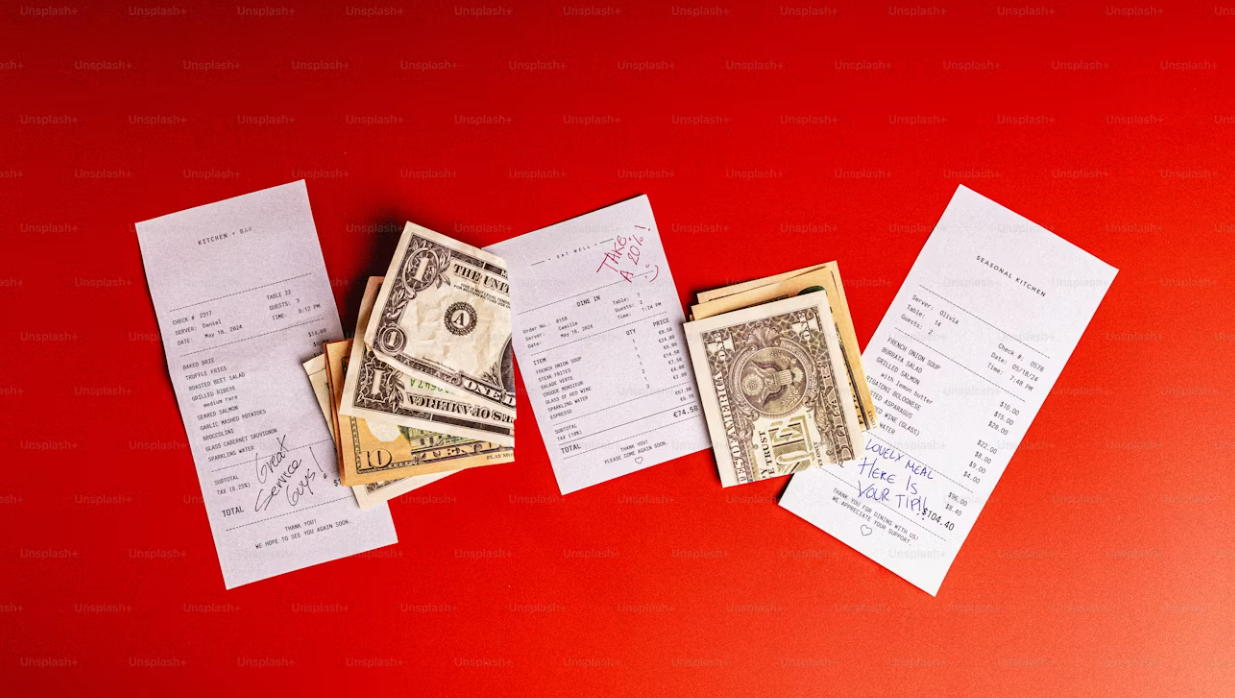
🤖 40% of employees admit faking receipts with AI. The average one is $100.
In 14 months, AI-generated fakes went from 0% to 71% of detected expense fraud — deliberately priced to slip past your auto-approval. Your controls were written for paper.
This week
Two studies landed this quarter that every corporate travel manager and finance lead needs to read together — not separately.
- AppZen, across 174 enterprises, found that AI-generated fake receipts went from 0% of caught expense fraud in March 2025 to 70.8% by mid-May 2026. Fourteen months. One category of attack now dominates every other.
- Emburse, surveying 2,000 business professionals in the US and UK, found 34% of respondents admit to using AI to generate a fake business-expense receipt. In the US alone the number is 40%. Thirty-six percent of them used AI tools their employer paid for.
The average AI-generated fake is about $100. The median is $32. Not a rounding error — a design choice. AppZen's researchers described the pattern as "high-volume, low-dollar, deliberately sized to slip under most companies' auto-approval thresholds." Your expense policy, written when the worst fake was a Photoshopped restaurant slip, is now a filter that lets 71% of new-generation fraud through.
Why this actually matters
1. This is a control-design problem, not a policy problem. Under $75, most expense platforms auto-approve. That threshold was set when generating a convincing fake receipt cost real effort. It now costs zero. AppZen's own numbers show the shift was step-function: AI-generated fakes were 39% of detections in April 2026, then 71% one month later. A one-month jump like that means the attack surface changed, not the workforce. If your approval logic still trusts a clean-looking PDF under a dollar threshold, you are auto-approving the exact segment the attack is aimed at.
2. It's your own AI subscriptions doing the work. Emburse's survey isolated a detail every CFO should read twice: 36% of respondents who submitted AI-generated fake receipts used AI tools their employer paid for. Sixty-one percent used those employer-funded tools outside of work. The infrastructure for the attack is already inside the company, on the corporate card, in the SSO tenant. Blocking "consumer AI" at the network edge doesn't touch this.
3. Reimbursement lag is the pressure creating the behavior. Emburse also asked why. Of employees who admitted passing personal purchases as business expenses, 51% in the US (and 45% in the UK) had incurred overdraft or late-payment fees while waiting for reimbursement. Seventy-six percent of them said they were "somewhat or very concerned" about personal finances. If your team is fronting business expenses on a personal card and waiting three to six weeks to be paid back, you are running a system that generates the financial stress that Emburse's data links to the fraud.

What this means for your program
- Pull the last 90 days of sub-threshold approvals. Filter for receipts submitted as image/PDF with no matching corporate-card transaction. The AI-fake attack pattern specifically avoids reconciled card feeds — it lives in the "employee paid out of pocket, submitted a receipt" lane. If that lane is 20% of your volume, that's your exposure surface.
- Change what "approved" means. Auto-approval should require a matched card transaction, not just a clean-looking receipt under $X. If there's no card feed to match, the receipt goes to a human. Yes, that's more work — that's the point.
- Move managed spend onto a corporate card. Every dollar an employee doesn't front is a dollar they can't fake a receipt for. Reimbursement-based programs are where the exposure lives; card-first programs eliminate the category by construction.
- Ask your expense vendor what they detect, specifically. "AI fraud detection" is a marketing phrase. Ask which model, what recall/precision they publish, and how often they update against new generators. If the answer is thin, assume you are unprotected.
The numbers
- AI-generated fake receipts went from 0% to 70.8% of detected expense fraud between March 2025 and mid-May 2026, based on 1,471 fakes submitted by 745 employees across 174 companies, totaling $148,143 in claimed reimbursements. (PYMNTS — AppZen data, June 2026)
- Average AI-generated fake receipt: ~$100. Median: ~$32. Template-based fakes averaged $182. "Deliberately sized to slip under most companies' auto-approval thresholds." (Accounting Today — Use of AI receipts in expense fraud soars)
- 34% of 2,000 business professionals admit using AI to fake a receipt — 40% in the US, 29% in the UK. 36% used employer-funded AI tools to do it. (Emburse — AI-Generated Receipts Are Here. Expense Controls Need to Catch Up.)
- 51% (US) / 45% (UK) of employees who admitted expense fraud had incurred overdraft or late-payment fees waiting on reimbursement — reimbursement lag is a documented driver of the behavior. (Emburse survey via Accounting Today)
- 70% of CFOs believe employees may already be using AI to falsify T&E records; 10% are certain of it in their own org, per SAP Concur data cited by the Financial Times. (The Decoder — SAP Concur / FT survey)
Two tools built exactly for this moment
Full disclosure — we build these:
- Travel Code Expense Management → — Card-transaction-first reconciliation, line-item receipt capture with AI-generation detection, and real-time policy enforcement. The auto-approval logic starts from the card feed, not the image — which is exactly where the current attack pattern is designed to fail.
- Travel Code Net-60 Card → — 60-day settlement at 0% interest (or shorter terms with up to 1.5% TC Cash back), and the employee never fronts the cost. When there's no reimbursement gap, there's no financial-stress incentive that the Emburse data ties directly to the fraud behavior.
Launch offer — Scale plan, 100% off for 6 months. First companies to sign a contract lock in six months of the full integrated Scale plan (travel + expense + cards + AI agents) at zero cost. Ends August 31. If closing this control gap before Q4 audit matters, this is the window. Reply and we'll set up a 20-minute walkthrough.
The bottom line
The story most of the industry told this summer was that budgets are outrunning trips — the GBTA index, the Q2 airline calls, the BTSA buyer survey. Underneath that, a second story just broke: the receipts flowing into your expense system are increasingly fictional, generated with the AI subscriptions you pay for, sized to slip past the approval logic you last reviewed in 2023. Both stories point to the same fix. Programs that move managed spend onto a card, reconcile from the card feed rather than the image, and shorten the reimbursement gap don't just save money — they design the fraud out. The programs that wait for their expense vendor to "add an AI detection feature" will find out at year-end audit which category they're in.
Sources
- PYMNTS — AI-Generated Fake Receipts Now Make Up 71% of Expense Fraud
- Accounting Today — Use of AI receipts in expense fraud soars
- Emburse — AI-Generated Receipts Are Here. Expense Controls Need to Catch Up.
- Forbes — AI-Generated Fake Receipts Are Changing Expense Fraud
- The Decoder — AI fuels a new wave of fake receipts, according to SAP Concur
Travel Code Insider is a weekly briefing for corporate travel leaders. Reply with what's working — or what isn't. travel-code.com · Expense Management · Net-60 Card